48-Hour California Getaway
48 Hours in Monterey
Two days of California history, Cannery Row, sea otters, and a bay that has shaped Monterey for centuries
Monterey is easy to misunderstand.
Arrive for a few hours and you might see Cannery Row, visit the Aquarium, eat something near the waterfront, and conclude that you’ve seen the city.
You haven’t.
Long before Cannery Row became a visitor destination, Monterey was one of the most important settlements in early California. It served as California’s capital during the Spanish and Mexican periods, while ships entered its harbor carrying goods and news from distant ports.
Later, enormous schools of sardines helped create an industrial waterfront lined with canneries.
Then the sardines largely disappeared. The canneries closed. And Monterey reinvented itself again.
Today, the same bay that supported those industries is internationally associated with marine research, conservation, recreation, and one of the world’s best-known aquariums.
That’s the Monterey we’re going to explore.
Not simply a town beside the Pacific, but a community whose story has repeatedly been shaped by it.
In Monterey, the ocean isn’t simply the view. It’s part of the story.
At a Glance
Best for: Couples, families, history travelers, wildlife lovers, walkers, food travelers, and anyone interested in California’s relationship with the Pacific.
The pace: Easy and mostly walkable, with one substantial Aquarium visit and plenty of time beside the bay.
Stay: Two nights.
Don’t miss: Old Monterey, the waterfront, Cannery Row, the Monterey Bay Aquarium, and enough unscheduled time to simply watch the bay.
Good to know: Much of this itinerary can be experienced on foot. Once you’ve parked, leave the car alone whenever practical.
Where to Stay
Monterey gives us something many California coastal destinations don’t: the opportunity to park the car and forget about it for significant portions of the weekend.
Look for lodging around downtown/Old Monterey, the waterfront, or Cannery Row.
Each creates a slightly different experience.
Downtown puts historic Monterey and restaurants within easy reach. Cannery Row places the Aquarium and bay outside your door. The waterfront gives you convenient access to Fisherman’s Wharf and the coastal recreation trail.
For only two nights, favor location over saving a modest amount on a room farther away.
Walking back to your hotel after dinner is part of the pleasure here.
Day 1 — Before Cannery Row
Start in Old Monterey.
That’s deliberate.
Cannery Row may be Monterey’s most recognizable district today, but the city’s story began long before sardines were packed into cans.
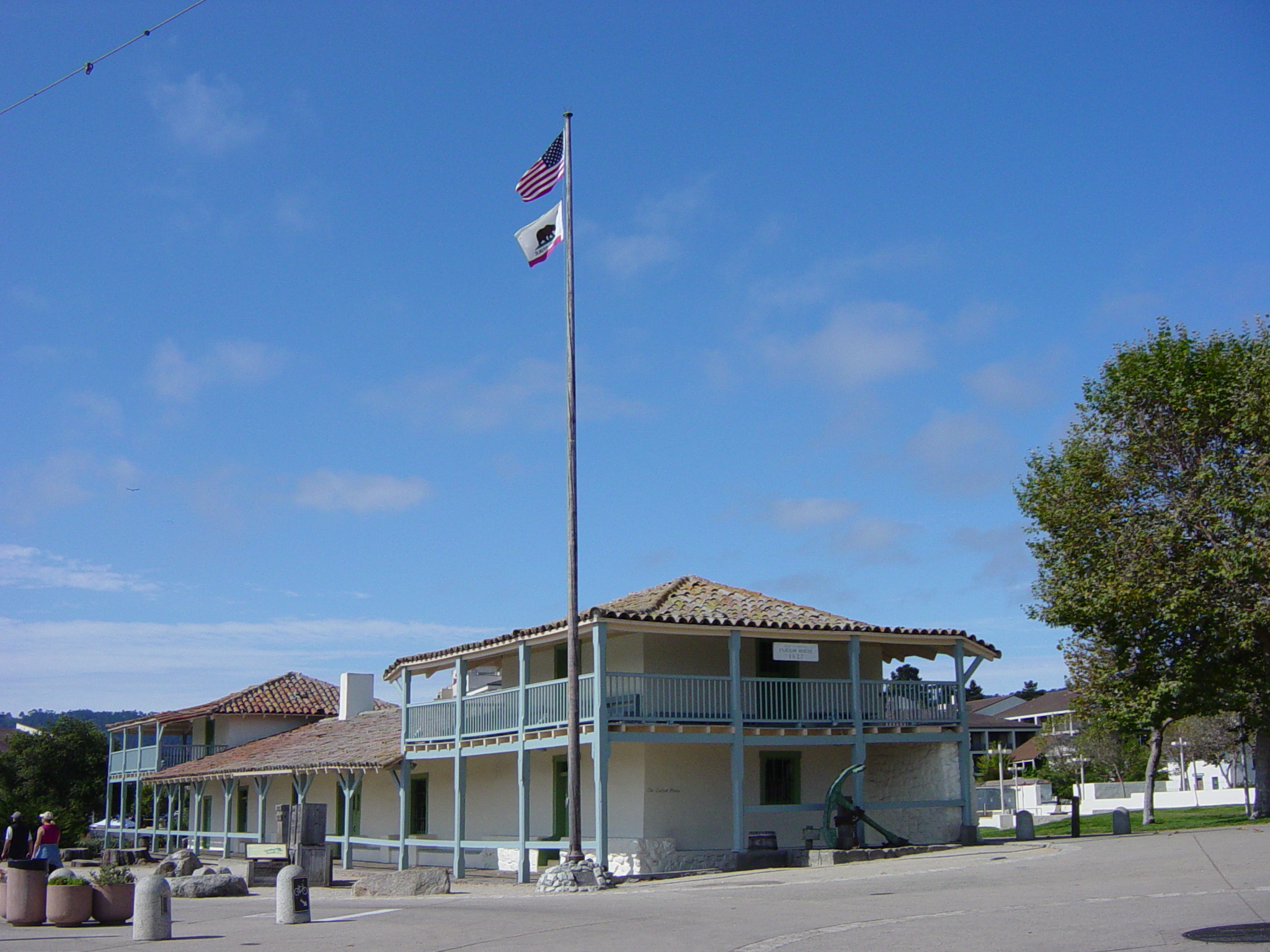
Begin around Custom House Plaza. The historic Custom House is considered California’s oldest government building and stands within Monterey State Historic Park, which preserves buildings associated with the city’s Spanish, Mexican, and early American periods.
Spend some time looking around before finding the Path of History.
The complete walking route connects numerous historic sites through Old Monterey, but we’re not going to treat it like a scavenger hunt.
Follow part of it. Notice the historic adobes and architecture. Read enough to begin understanding the people who lived here.
Then stop when you’ve learned enough to make the streets around you look different.
That’s the objective.
History is useful when it changes what you see next.
Late Morning — Fisherman’s Wharf
Make your way toward Old Fisherman’s Wharf.
Now Monterey begins transitioning from political history toward its maritime story.
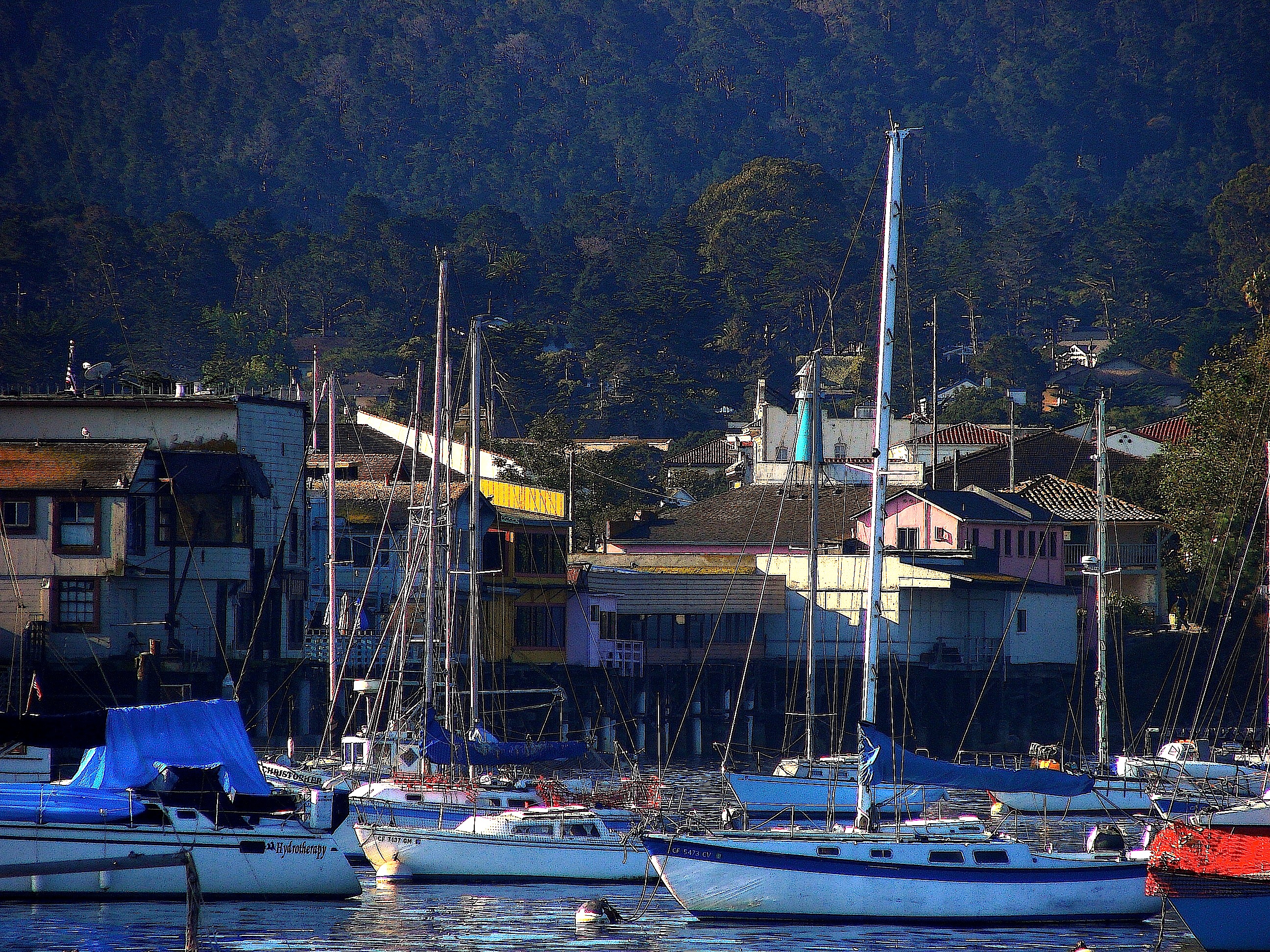
Walk out along the wharf and look back toward shore. Watch the boats and look into the water. You may see sea lions or spot sea otters farther out.
Or the wildlife may decide to be somewhere else.
That’s fine.
Monterey Bay isn’t a zoo.
Have lunch around the waterfront if something appeals to you. Seafood is an obvious choice, but it doesn’t have to be mandatory simply because we’re beside the ocean.
Then start walking toward Cannery Row.
Afternoon — Follow the Waterfront
Use part of the Monterey Bay Coastal Recreation Trail.
This is one of the easiest ways to understand how Monterey fits together. The trail follows the route of the former Southern Pacific railroad and today connects waterfront areas used by walkers, runners, and cyclists.
Don’t hurry.
Stop when the bay gives you a reason. Watch kayakers, look for wildlife, listen to the sea lions.
Eventually you’ll reach Cannery Row.
Cannery Row — What Was Here Before
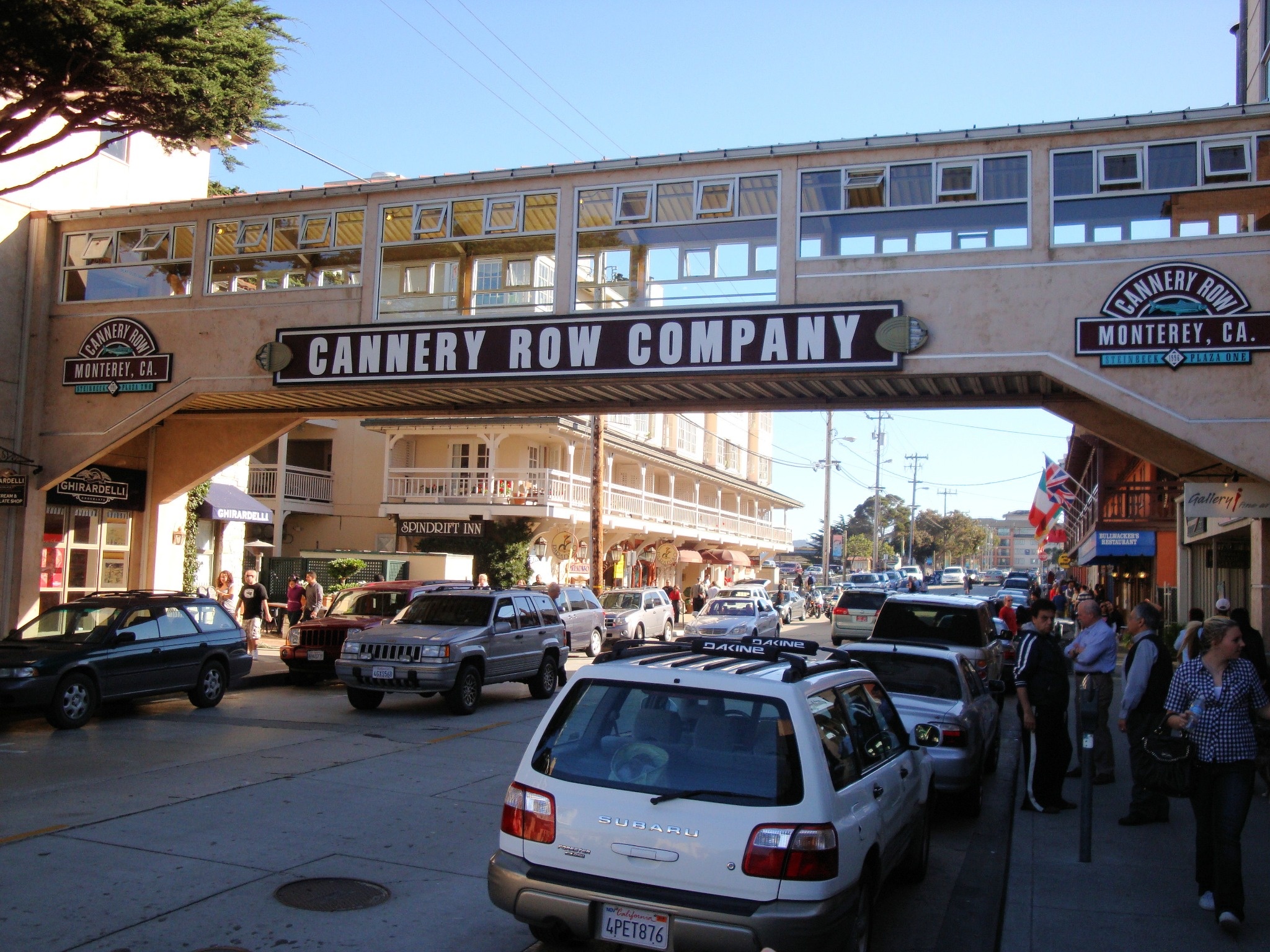
Today Cannery Row is filled with hotels, restaurants, shops, tasting rooms, attractions, and visitors.
But take a moment to understand what you’re walking through.
The street was originally called Ocean View Avenue. During the first half of the 20th century, Monterey’s enormous sardine industry transformed this waterfront into a landscape of canneries and processing plants.
John Steinbeck later immortalized the neighborhood and its people in his 1945 novel Cannery Row. In 1958, the city officially renamed Ocean View Avenue Cannery Row.
Knowing that changes the walk.
Some of the industrial buildings remain, although their purposes have changed. Look at them and try to imagine machinery running, workers moving between buildings, fishing boats unloading sardines, and the smell of an industrial waterfront rather than today’s restaurants and hotels.
Monterey has reinvented itself.
Cannery Row lets you see some of the evidence.
Late Afternoon — Stop Exploring
You’ve walked enough.
Return to your hotel. Sit beside the water if you can. Have coffee. Rest.
This afternoon doesn’t require another museum.
Tomorrow we’re spending several hours inside one.
Give yourself some unscheduled time instead. Monterey is particularly good at rewarding travelers who are willing to stop moving for a while.
Evening — Dinner Near the Bay
Stay around Cannery Row, the waterfront, or downtown for dinner.
Choose somewhere that doesn’t require retrieving the car and driving across the peninsula. The point tonight isn’t finding the one restaurant someone says you absolutely have to visit. It’s keeping the evening easy.
Afterward, walk.
The waterfront changes when many of the day’s visitors leave. Listen for sea lions. Look across the darkening bay.
Then call it a night.
Tomorrow we’re going to understand more about what’s living out there.
Day 2 — Monterey Bay
Yesterday was largely about the people who shaped Monterey.
Today belongs to the bay itself.
Morning — Breakfast Before the Aquarium
Start slowly.
Have breakfast or coffee near your hotel or along the walk toward Cannery Row.
There’s no reason to turn breakfast into another destination. Choose somewhere convenient, take your time, and enjoy a quieter Monterey morning before the waterfront becomes busier.
Then make your way to the Monterey Bay Aquarium.
Give it a meaningful part of the morning—and perhaps some of the early afternoon.
Monterey Bay Aquarium
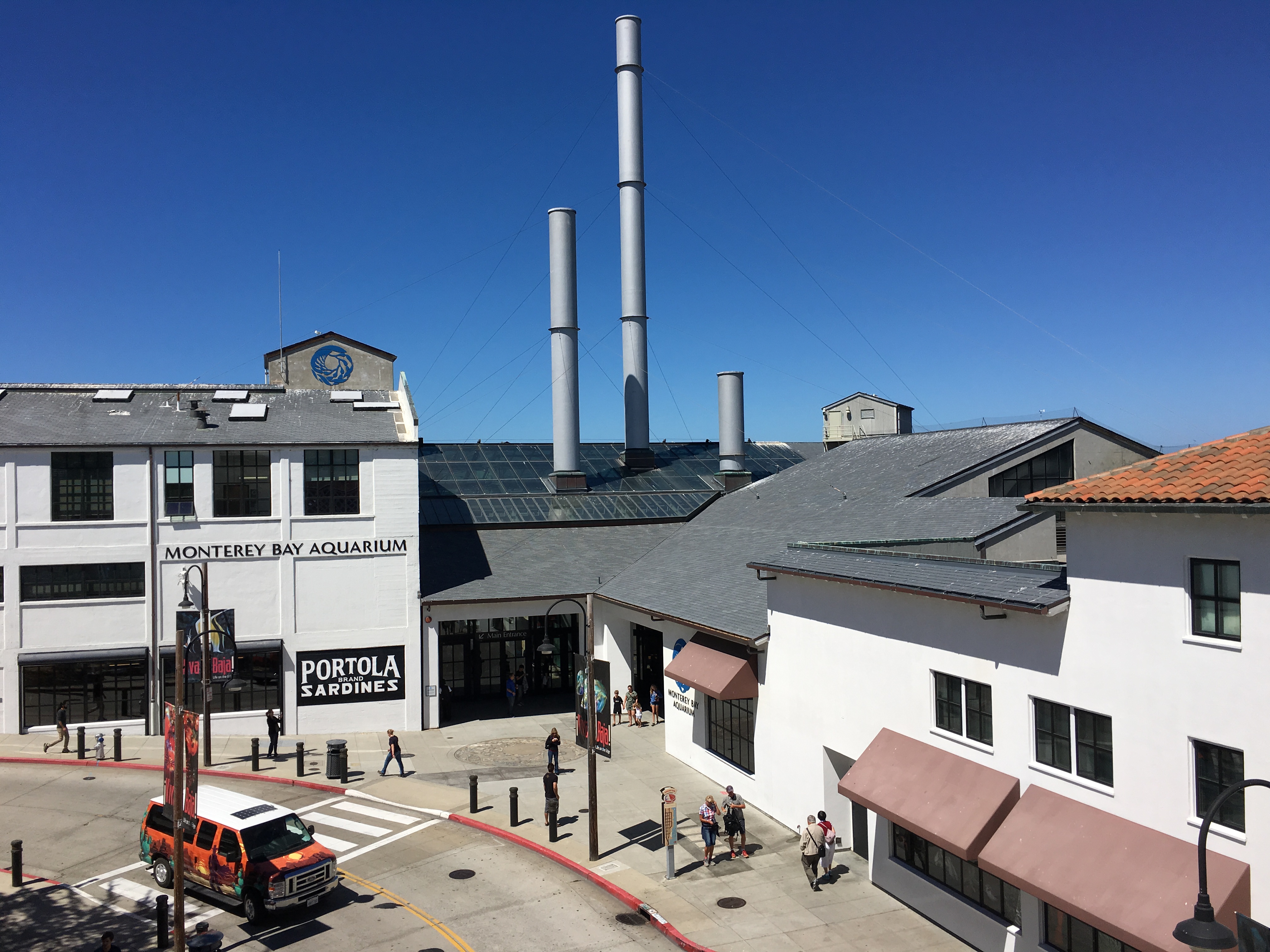
This is one famous attraction we’re not going to minimize.
Give it time.
The Aquarium is worth several hours, but don’t approach it as a building filled with exhibits that must all be completed.
Start with what interests you. Spend time with the kelp forest. Watch sea otters. Explore exhibits about Monterey Bay and the larger Pacific. Learn something about the ecosystems outside the windows.
Then look through those windows.
That’s what makes the Aquarium particularly powerful.
The ocean being explained inside is the same ocean you’ve been walking beside since yesterday.
The Aquarium isn’t separate from our Monterey experience.
It gives context to it.
Don’t Rush the Aquarium
This isn’t a place where completing every room earns extra credit.
If you spend twenty minutes watching one animal, that’s twenty minutes well spent. If a presentation interests you, stay.
And if you become tired after several hours, leave.
The objective is understanding, not endurance.
Lunch — Stay Nearby
After the Aquarium, have lunch around Cannery Row or somewhere convenient to the waterfront.
Then deliberately slow the itinerary down.
You just spent several hours learning about Monterey Bay.
Now go outside and look at it.
Afternoon — The Bay Without an Agenda
This part of the day belongs to you.
Walk more of the recreation trail. Rent bicycles. Sit beside the water. Watch for sea otters. Have coffee. Return somewhere you liked yesterday. Walk back toward Fisherman’s Wharf.
Or do nothing for a while.
If you’re traveling with children, this can be especially useful.
Not every hour needs educational value.
Sometimes everyone simply needs to sit down.
Look for Wildlife—Don’t Demand It
Monterey Bay is famous for marine life.
That doesn’t mean an otter is required to appear because you have forty minutes available.
Look. Wait. Use binoculars if you brought them.
And enjoy what happens to be there.
Wildlife encounters become considerably better when we stop treating animals like scheduled attractions.
Late Afternoon — One More Walk
As the light begins to change, return to the waterfront.
The same bay you’ve seen throughout the weekend may look completely different now.
Fog may be moving in. The wind may have changed. The water may be calmer. Wildlife may be more active—or completely absent.
That’s part of Monterey.
The bay sets much of the atmosphere here.
There’s no particular destination you need to reach. Walk until you find somewhere you’d like to stop, then stay awhile.
Evening — Stay Close
Have one final Monterey dinner.
Again, don’t drive somewhere simply because you’ve been told there’s one restaurant you cannot miss. Choose somewhere that lets the evening remain relaxed.
Then walk toward the water one more time.
Yesterday the bay was scenery.
After today, hopefully, it means something more.
If You Have a Few More Hours
Get Out on Monterey Bay
Consider a whale-watching excursion.
Monterey Bay and the surrounding waters are well known for whale watching, and excursions depart from Monterey’s waterfront.
But we’ve deliberately left this outside the core 48-hour itinerary.
A boat excursion requires a meaningful block of time. Ocean conditions matter. Some travelers simply don’t enjoy boats. And wildlife is never guaranteed.
If you go, approach it with the right expectation.
A responsible operator can take you into habitat where whales and other marine animals may be observed.
Nobody can tell a wild whale where to be at 10:15 Tuesday morning.
That’s part of the experience.
Dress more warmly than you think you’ll need. Conditions offshore can feel considerably colder than they do beside your hotel.
And if you’re susceptible to motion sickness, plan accordingly.
If You Have One More Day
Pacific Grove
Continue around the Monterey Peninsula into Pacific Grove.
Don’t treat it merely as the road between Monterey and Carmel.
Give it some time of its own.
Pacific Grove offers a quieter coastal experience, historic neighborhoods, shoreline walking, and another opportunity to spend time beside Monterey Bay.
If you’re visiting from mid-October through February, add the Monarch Butterfly Sanctuary to your day. Western monarchs traditionally overwinter here, with late November into early December often offering some of the best opportunities to see them. Their numbers vary from year to year, so check the current monarch count before making the sanctuary a primary reason for your visit.
If you want to see monarchs clustered in the trees, the Museum recommends visiting in the morning before about 11 a.m. or during cool, overcast conditions. On warmer, sunny days, midday and afternoon are more likely to bring butterflies into flight.
Walk part of the coast. Explore town. Have lunch somewhere that appeals to you.
And allow the day to remain slower than the two that came before.
This extension also makes geographic sense.
Monterey introduced you to the bay.
Pacific Grove continues around it.
Beyond Pacific Grove, the landscape eventually leads toward Carmel.
We’ll give Carmel its own 48 hours.
Before You Go
Monterey is easier to navigate than many California destinations, but a little planning improves the weekend.
If the Monterey Bay Aquarium is important to you, check current hours and ticket requirements before arriving.
If you’re considering whale watching, reserve ahead and confirm the departure time, check-in requirements, and expected trip length.
Bring layers. Monterey Bay weather can change quickly, and a pleasant California day can become cool, breezy, or foggy near the water.
Bring comfortable shoes, too. We’re deliberately walking a significant portion of this itinerary.
If you’re interested in wildlife, binoculars are worth packing.
Before choosing your weekend, check Monterey’s event calendar. Major events can significantly affect hotel availability, traffic, restaurant reservations, and room prices. This is particularly important around Monterey Car Week and other major annual events.
There’s nothing wrong with visiting during one.
You simply want to know you’re doing it before discovering that the ordinary Monterey weekend you expected is anything but ordinary.
Most importantly, leave some room in the itinerary.
The Aquarium is extraordinary, but it shouldn’t become your entire understanding of Monterey. Walk the historic streets. Spend time along the waterfront. Look at the old Cannery Row buildings. Watch the bay.
Let the pieces connect.
In Monterey, the ocean isn’t simply the view. It’s part of the story.
And remember what these trips are supposed to be:
48 hours away—not 48 hours of appointments.
Related Getaways
Head south with 48 Hours in Big Sur, where Monterey’s historic waterfront gives way to Highway 1, redwoods, cliffs, mountains, and a much wilder relationship with the Pacific.
Continue around the peninsula with 48 Hours in Carmel, where the experience becomes more village-centered: walkable streets, architecture, restaurants, galleries, and the beach.
Farther south, 48 Hours in Cambria offers Moonstone Beach, a small coastal community, and a gentler Highway 1 rhythm.
Or turn inland with 48 Hours in Paso Robles, replacing Monterey Bay with vineyards, ranchland, and wine-country roads.
Together, these destinations show how quickly the character of California’s Central Coast can change.
Monterey connects California history with the Pacific, an industrial past with modern conservation, and a historic city with one remarkable bay.
Photo Credits
Monterey Harbor and Fisherman’s Wharf: Smatprt, via Wikimedia Commons, public domain. Image cropped for display.
Old Custom House, Monterey: Leonard G., via Wikimedia Commons, licensed under CC SA 1.0. Image cropped for display.
Cannery Row, Monterey: Jim G, via Wikimedia Commons/Flickr, licensed under CC BY 2.0. Image cropped for display.
Monterey Bay Aquarium: Rhinopias, via Wikimedia Commons, licensed under CC BY-SA 4.0. Image cropped for display.