48 Hours in Santa Barbara
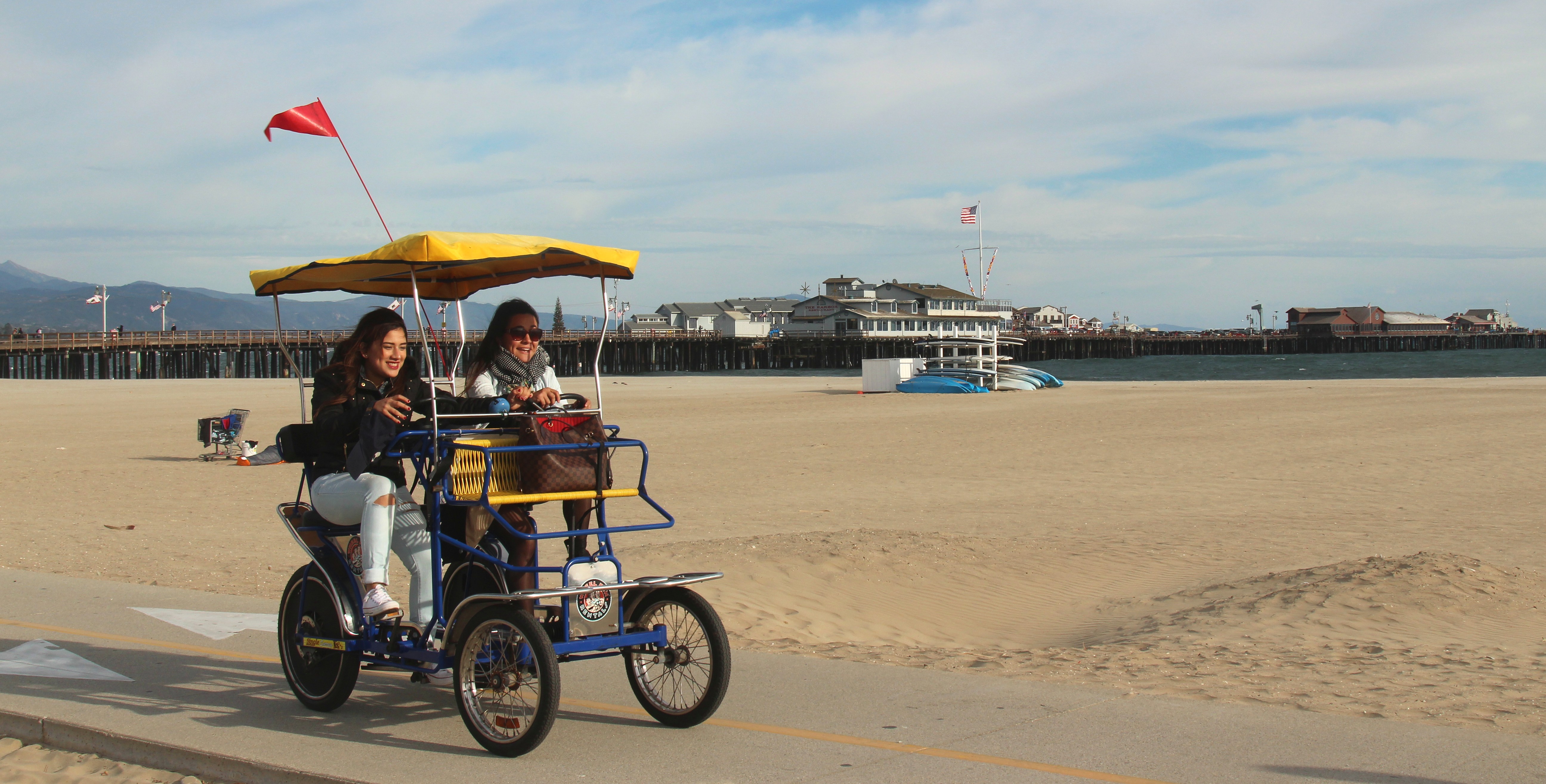
Two days of Spanish Colonial history, Pacific views, neighborhood wandering, and a taste of Santa Barbara wine country
Santa Barbara can make a weekend feel longer than it is.
Maybe it's the mountains rising abruptly behind the city. Maybe it's the red-tile roofs and white stucco buildings. Maybe it's the way State Street leads you toward the Pacific, where palm trees, beaches and Stearns Wharf suddenly make downtown feel like a resort town.
Or maybe it's because Santa Barbara gives you so many different versions of California without requiring you to spend the weekend in the car.
Historic buildings and paseos sit comfortably beside restaurants and shops. The waterfront is close to downtown. The Funk Zone has transformed former warehouses into a neighborhood of galleries, restaurants, murals and wine-tasting rooms. And the city's layered history remains visible rather than being relegated to a museum.
You could fill four days here without difficulty.
We're giving it two.
That means choosing carefully.
At a Glance
Best for: Couples, friends, food and wine lovers, history enthusiasts, walkers, coastal travelers, and anyone who likes a little sophistication without needing a formal itinerary.
The pace: Active enough to see the city, relaxed enough to enjoy it.
Stay: Two nights.
The weekend: Downtown Santa Barbara, distinctive architecture and history, the waterfront, the Funk Zone, and a taste of Santa Barbara County wine—with enough room left to enjoy where you are.
Good to know: Much of this itinerary works particularly well on foot. Once you're downtown or near the waterfront, leave the car alone whenever you reasonably can.
Where to Stay
For only two nights, location is more important than having every possible hotel amenity.
Hotel Californian places you between the waterfront and the Funk Zone. It is the upscale choice and particularly convenient if food, wine and walking are important parts of your weekend.
Hotel Santa Barbara puts you directly on State Street in the heart of downtown. This is a strong choice if you want the city's shops, restaurants and historic center immediately outside the door.
Harbor View Inn shifts the emphasis toward the Pacific. It sits across from the waterfront near Stearns Wharf, making it particularly appealing for travelers who want the ocean to be the first thing they see in the morning.
All three work for the same reason:
They reduce the amount of time you spend getting to Santa Barbara and increase the amount of time you spend being there.
Day 1 — From Old Santa Barbara to the Pacific
Afternoon — Start Downtown
After checking in, begin on foot.
State Street is the spine of downtown Santa Barbara, but don't treat it simply as a street you need to walk from one end to the other.
Wander.
Look down the side streets and paseos. Notice the courtyards, tile work, arcades and architecture. Stop when something interests you.
Santa Barbara's visual identity didn't happen by accident. Spanish Colonial Revival architecture became central to the city's rebuilding and identity during the 20th century, and today it gives downtown a sense of place that distinguishes it from almost every other California coastal city.
You don't need an architecture degree to appreciate it.
Just look around.
Santa Barbara County Courthouse — Go Up
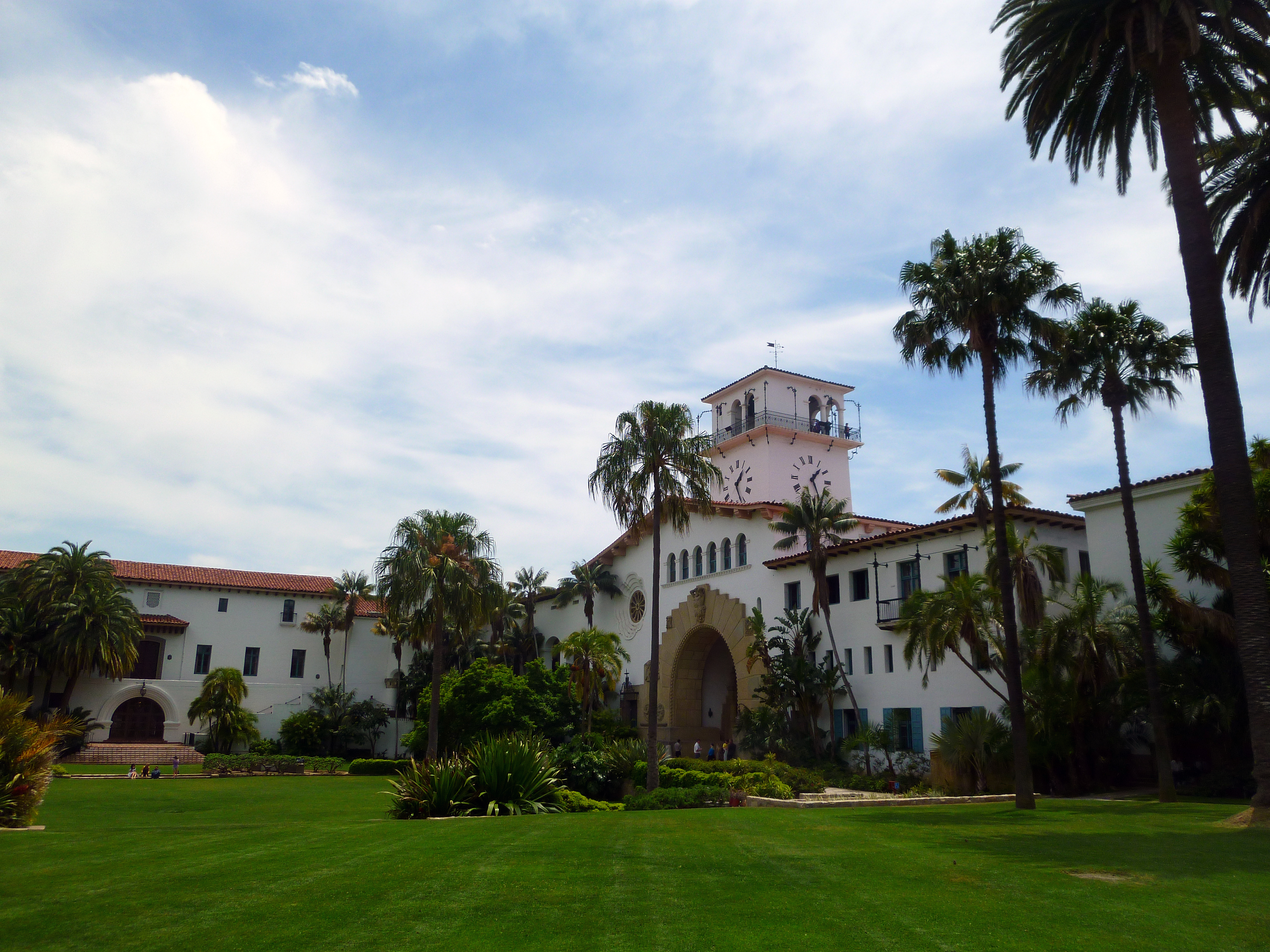
Make the Santa Barbara County Courthouse your principal historic stop downtown.
The building itself deserves time, but the real reward for a first-time visitor is perspective.
Head toward the observation area in the clock tower when access is available.
From above, the city's geography suddenly makes sense: red-tile roofs below you, mountains behind you and the Pacific in the distance.
It's one of the best introductions to Santa Barbara because you're not simply looking at an attraction.
You're looking at the city you're about to explore.
Late Afternoon — Follow the City Toward the Water
Now begin moving toward the Pacific.
Don't hurry.
State Street and the surrounding blocks gradually connect downtown with the waterfront. Give yourself permission to stop for coffee, browse a shop or sit somewhere simply because it looks pleasant.
Eventually, the buildings open toward Cabrillo Boulevard and the ocean.
Walk onto Stearns Wharf.
The wharf dates to 1872 and remains one of Santa Barbara's defining waterfront landmarks.
Walk to the end.
Look back toward the city.
From here, Santa Barbara appears almost improbably situated between the Pacific and the Santa Ynez Mountains.
This is why you came.
Early Evening — A Glass Above the Water, If You Want One
Wine country is going to become more prominent tomorrow, but Santa Barbara gives wine lovers an unusual opportunity right here.
The Deep Sea Tasting Room on Stearns Wharf pours Santa Barbara County wines with the Pacific quite literally beneath you.
You don't need to make this a formal tasting.
A glass while looking back toward the coastline is enough.
And if wine isn't part of your trip, simply keep walking.
Our itinerary should work equally well without it.
Dinner — Stay Near Downtown or the Waterfront
Tonight, choose dinner somewhere between downtown and the waterfront rather than getting back into the car.
The particular restaurant matters less than the rhythm we're trying to create.
You've spent the afternoon moving gradually from historic Santa Barbara toward the Pacific.
Stay there.
After dinner, take another walk.
There is no final attraction scheduled tonight.
That's deliberate.
Day 2 — Mission, Mountains, Wine, and the Funk Zone
Yesterday introduced the city's historic center and waterfront.
Today shows you how much more Santa Barbara can fit into a relatively small area.
Morning — Old Mission Santa Barbara
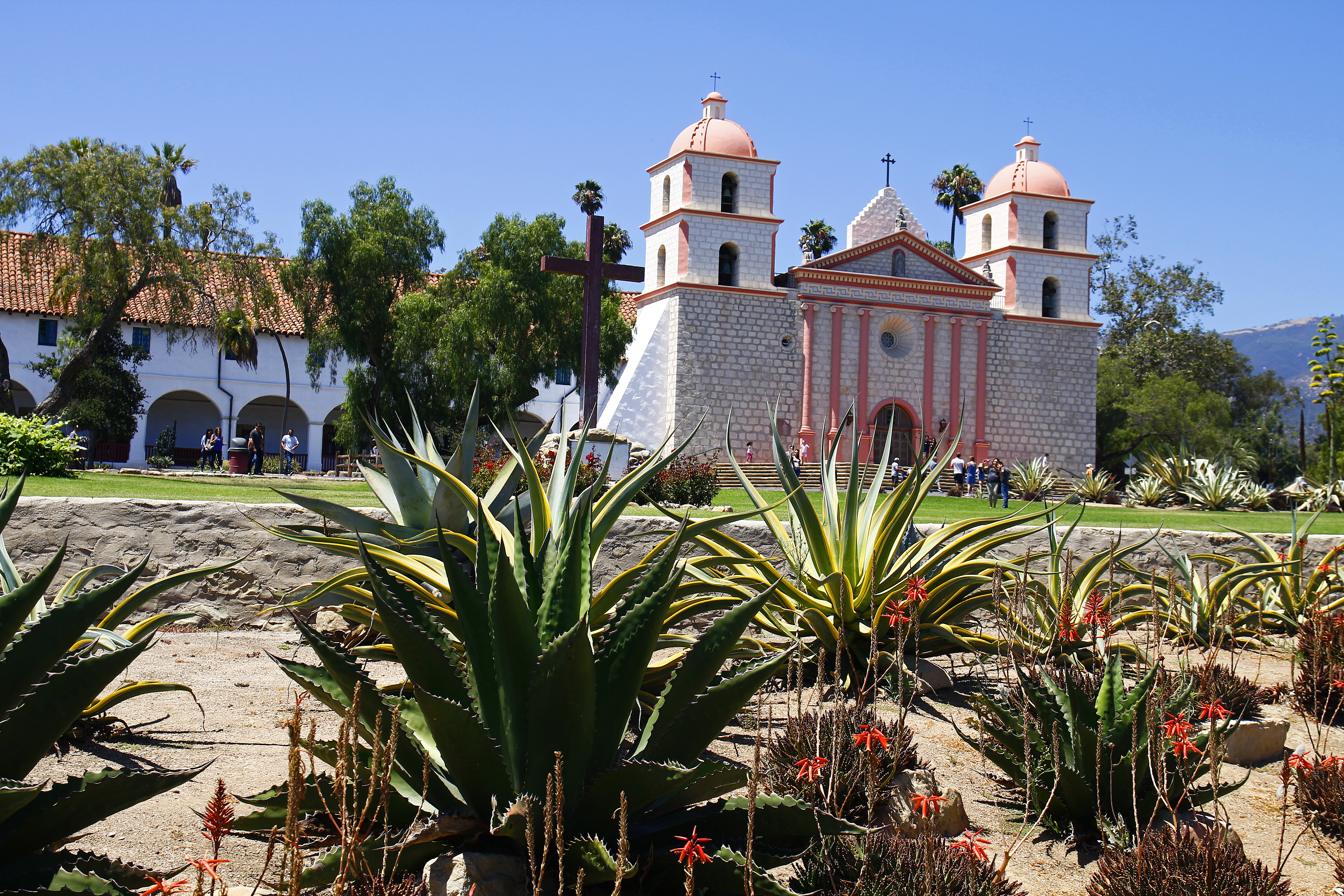
Start at Old Mission Santa Barbara.
Founded in 1786, the Mission remains one of the city's most recognizable landmarks and an important connection to the region's Spanish colonial history.
That history is also inseparable from the Chumash people, whose communities were here long before the mission was established and whose lives and labor became part of California's mission system.
Take enough time to understand where you are rather than treating the Mission simply as a backdrop for photographs.
The building, grounds and setting beneath the mountains create one of Santa Barbara's defining views.
But history is only part of today's story.
Late Morning — Stay Outside a Little Longer
Before immediately returning downtown, give yourself some outdoor time.
Santa Barbara's relationship with the mountains is almost as important as its relationship with the ocean.
That doesn't mean we need to send every traveler on a strenuous hike.
Walk the Mission grounds and surrounding neighborhood, spend some time outside, or choose an easy scenic stop that suits your energy and the day's conditions.
The point is to notice something that was easy to miss yesterday:
The mountains aren't scenery in the distance.
They are part of the city.
Lunch — Back Toward the Center
Return toward downtown for lunch.
Keep it uncomplicated.
This afternoon is where we're going to let Santa Barbara's contemporary personality take over.
Afternoon — The Funk Zone
Head toward the Funk Zone, the roughly 10-block neighborhood between downtown and the waterfront.
Former industrial buildings and warehouses now hold galleries, restaurants, shops, breweries and tasting rooms. Murals appear on walls and alleyways. The neighborhood feels deliberately less polished than the Spanish Colonial version of Santa Barbara you explored yesterday.
That's exactly why it belongs in this itinerary.
Don't arrive with a list of six places to visit.
Walk first.
Look at the murals.
Browse.
Then choose what interests you.
Taste Santa Barbara County Without Leaving Town
This is where wine naturally enters the weekend.
Santa Barbara's Urban Wine Trail brings wines from throughout Santa Barbara County into tasting rooms across the city, and the Funk Zone contains one of its largest concentrations.
For our 48 hours, one thoughtful tasting is enough.
One particularly useful choice is The Valley Project. Rather than focusing only on one estate, its tasting experience is designed around wines from different parts of Santa Barbara County. That makes it especially appropriate for someone trying to understand the region rather than simply collect tasting rooms.
Another possibility is Margerum & Barden, where Santa Barbara County wines, a patio and food make it easy to integrate tasting into the afternoon.
Travelers particularly interested in local wine history might instead choose Santa Barbara Winery, the county's oldest winery and a longtime Funk Zone presence.
Pick one.
If you're enjoying yourself and want another glass somewhere afterward, fine.
But don't turn the afternoon into a race between tasting rooms.
The purpose is to taste Santa Barbara wine, not complete Santa Barbara wine.
Not Drinking Wine? The Funk Zone Still Works
This neighborhood isn't dependent on alcohol.
Explore its galleries and murals. Stop for coffee. Browse the shops. Visit MOXI, The Wolf Museum of Exploration + Innovation if interactive science and technology appeal to you.
Or simply keep wandering.
That flexibility is one reason the Funk Zone belongs in our core itinerary.
Late Afternoon — Leave Some Space
Don't schedule anything for the next hour.
Return to the hotel.
Walk toward the beach.
Sit somewhere with coffee.
Or stay in the Funk Zone because you found something you weren't expecting.
Unused time isn't a failure of itinerary planning.
Sometimes it's evidence of good itinerary planning.
Evening — Dinner in the Funk Zone
Tonight, stay in the neighborhood.
The Lark is a natural fit for this itinerary. Its setting in a former fish market building and its emphasis on ingredients and shared dining connect dinner to the contemporary Central Coast experience we've spent the afternoon exploring.
Make a reservation if this is one of the meals that matters to you.
Afterward, walk toward the waterfront.
You began the trip yesterday moving from the city toward the Pacific.
Tonight you can finish the day doing much the same thing—but now Santa Barbara should feel considerably more familiar.
Before leaving the next morning, have breakfast or coffee and take one last walk.
Maybe that's along State Street.
Maybe it's beside the beach.
Don't force another major attraction into departure morning.
Santa Barbara gave us history, architecture, mountains, wine, neighborhoods and the Pacific in two days.
That's enough.
Unless, of course, you have a few more hours.
If You Have 3 More Hours
See Santa Barbara From the Water
We've spent plenty of time beside the Pacific.
Now consider getting onto it.
The Santa Barbara Harbor and waterfront offer opportunities for kayaking, paddleboarding, sailing and other excursions into the Santa Barbara Channel.
Choose according to the weather, season and your comfort level.
Or keep things considerably simpler.
Walk through the harbor and along the breakwater, watch the boats, look for wildlife and enjoy the working-waterfront side of Santa Barbara that feels quite different from Stearns Wharf.
Three extra hours don't have to become another major excursion.
They simply give you permission to stay near the ocean a little longer.
If You Have One More Day
Follow the Wine Into the Santa Ynez Valley
Yesterday's Funk Zone tasting introduced you to Santa Barbara County wine.
With another full day, you can go see where some of it comes from.
Head over the mountains toward the Santa Ynez Valley, where vineyards, wineries and small communities turn wine tasting into a landscape rather than an urban experience.
But keep the same rule we used in Santa Barbara:
Choose carefully.
Two or three meaningful winery experiences will tell you more about the region—and make for a much better day—than trying to collect as many tasting rooms as possible.
Leave room for lunch.
Leave room for scenery.
Leave room to discover something you didn't put on the schedule.
And if wine isn't your interest, use the extra day to explore more of Santa Barbara's coast, gardens, museums or nearby communities instead.
Before You Go
Santa Barbara rewards a little advance planning without requiring much of it.
Reserve lodging early for busy weekends.
Make reservations for the one or two restaurants that matter most to you.
If you want to visit a particular Urban Wine Trail tasting room, check its current hours and reservation policy before arriving. Tasting-room schedules vary, and some experiences require reservations.
Check current access and hours for historic attractions such as the Courthouse and Old Mission before building your day around them.
Bring comfortable walking shoes.
Bring layers.
And don't assume that because Santa Barbara has beaches, wine, history, restaurants, shopping, museums, mountains and a harbor you are obligated to experience every one of them in a weekend.
You're not.
There will always be something you didn't get to.
That's a reason to return—not a reason to hurry.
Most importantly, remember what this trip is supposed to be:
48 hours away—not 48 hours of appointments.
Related Getaways
Continue north along California's Central Coast with 48 Hours in Avila Beach or 48 Hours in San Luis Obispo.
For a different wine-country weekend, continue inland with 48 Hours in Paso Robles.
And when you're ready to turn Santa Barbara's urban wine introduction into a countryside trip, the Santa Ynez Valley is a natural future 48 Hours in California getaway.
Photo Credits
Santa Barbara Beach and Stearns Wharf: Prayitno, via Wikimedia Commons/Flickr, licensed under CC BY 2.0. Image cropped for display.
Santa Barbara County Courthouse: Archinia, via Wikimedia Commons, licensed under CC BY-SA 3.0. Image cropped for display.
Old Mission Santa Barbara: imke.sta, via Wikimedia Commons/Flickr, licensed under CC BY-SA 2.0. Image cropped for display.